Research
CCF’s research team conducts psychosocial research in the field of paediatric oncology and conducts regular research engagements with our direct service teams. Regular research engagements support programme and service development through providing direct service teams with updates on relevant literature, contextualise findings from research and literature, programme and service evaluation support. Through these, the research team contributes to CCF’s mission of improving the quality of life of beneficiaries.
Ongoing Research Projects and Engagements
The Growing QoLaS – QoL Assessments Growing Up in Singapore After Cancer
Since August 2021, the Research team collaborated with Prof Allen Yeoh (NUH) to support the implementation of The Growing QoLaS, a 10-year longitudinal study examining the quality of life of children with cancer and their families throughout treatment and survivorship. To date, over 200 families have participated in our study. Preliminary findings have provided valuable insights into families’ experiences and informed the patients’ care team by identifying areas where additional psychosocial support may be needed.
Completed Research Projects and Engagements
2025
- SUrvivors’ Profiling ExeRcise (SUPER)
Aligned with the 1 CCF 2030 roadmap, the Research team conducted the SUPER study to better understand the shifting profiles and lived experiences of childhood cancer survivors in Singapore. The study surveyed 254 survivors who were diagnosed between 2007 and 2023, examining their health, Quality of Life (QOL), education, employment, and social integration outcomes among survivors served by CCF.
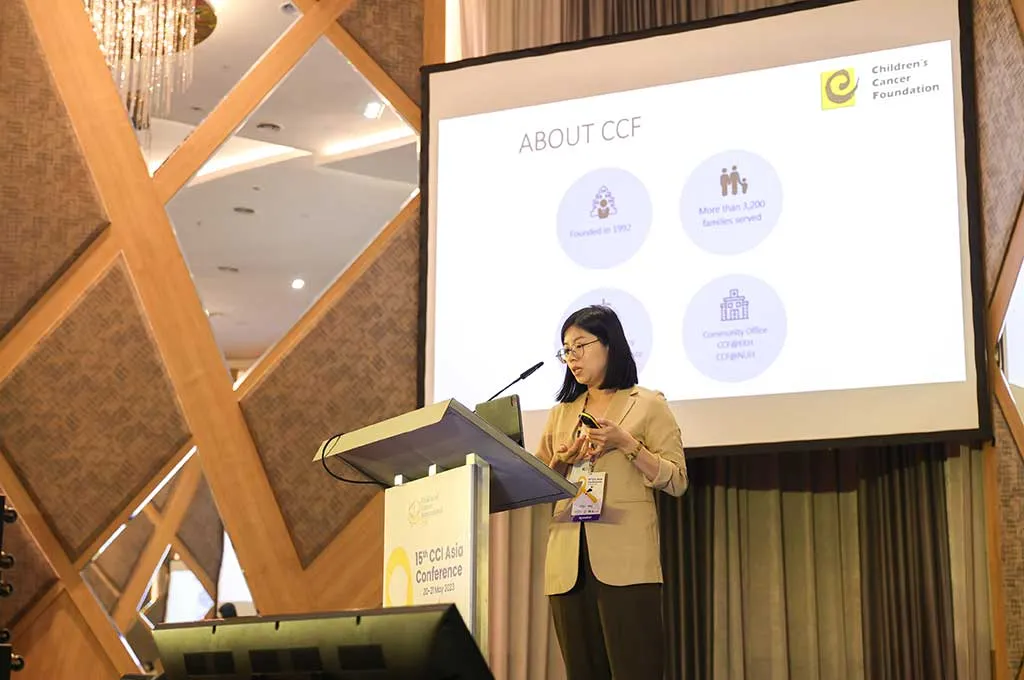
Findings showed that survivors’ QOL was comparable to Singapore population across most domains. However, survivors’ psychological wellbeing was scored consistently lower than the healthy population across all age groups. Also, survivors who had recently completed treatment reported lower physical well-being while long-term survivors reported lower social well-being. Although 91% of survivors were receiving follow-up care, only 45% reported experiencing or suspecting late effects, suggesting potential gap in late effect recognition. In response, CCF intends to start conversation of late effects earlier into survivorship and to strengthen our physical wellness initiatives to better support our survivors’ physical well-being. The study was presented at SIOP Asia in 2026 to raise awareness of the importance of long-term childhood cancer survivorship care.
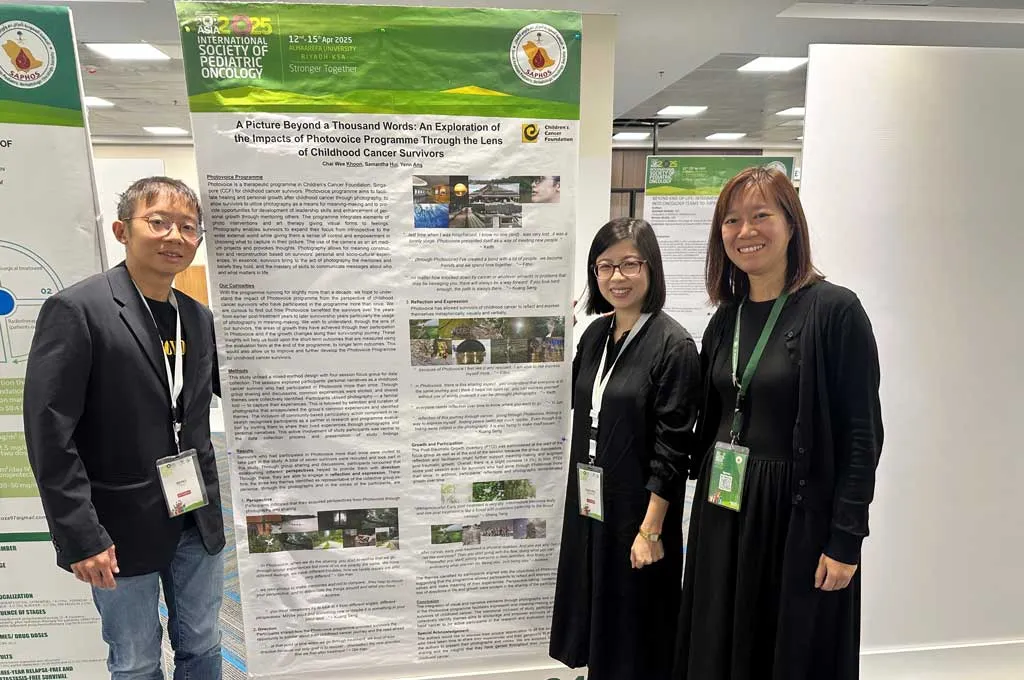
- A Picture Beyond a Thousand Words: An Exploration of the Impacts of Photovoice Programme Through the Lens of Childhood Cancer Survivors (2025)
In collaboration with the Specialist Clinic, the Research team conducted a study to understand how Photovoice has benefited the survivors over the years across different stages of survivorship, particularly with the usage of photography in the meaning-making process. The study involved focus group discussions with seven survivors, exploring their personal narratives and experiences as Photovoice participants. Three key themes emerged: (1) Perspectives: participants were able to explore their own and others’ views in life. (2) Direction: participants had opportunities to contemplate their childhood cancer journey & future. (3) Reflection and Expression: Participants were able to recognise and appreciate their personal growth. These themes aligned with the intended objectives of Photovoice, suggesting that the programme has successfully provided opportunities for participants to reflect and express themselves.
The presentation also marked a significant milestone, as it was the first time we co-presented our findings with a survivor, Keith Teo, at SIOP Asia 2025, highlighting the value of survivor partnership in research dissemination. The work was also subsequently presented in NUS SSR-TOUCH Conference in 2025 together with another survivor, Tay Qin Han.
- Research and Evaluation Support to CCF programmes and services
Employment
- Refined the evaluation strategy for the ARTrepreneur programme in response to the insights from 2024 evaluation findings.
- Reviewed portfolio priorities in response to result emerged from SUPER.
Wellness
- Development of evaluation strategy to evaluate Fitness Challenge to support their program development and outcome reporting.
Casework and Counselling
- Development of hospital services Theory of Change to articulate intended outcomes of casework and counselling in hospital setting.
2024
- Needs That Matter: Caregivers’ perception of their own needs as their child undergoes cancer treatment in Singapore
Needs That Matter was a collaborative study between the Caregiver Support Service (CSS) the Research Team that examines the needs of our caregivers who are currently caring for their child in treatment. The study was designed with generate actionable insights to aid their program development. A total of 45 caregivers whose children were diagnosed in 2022 participated in the study. Findings showed that existing support and resources are generally meeting the informational and practical needs of the caregivers of children with cancer in treatment. Also, caregivers of children with cancer tend to prioritize their child’s care needs over their own needs while their child is in treatment, often discounting the importance of their needs and well-being. This suggests that greater attention could be paid to the emotional and psychosocial needs of the caregivers.
The findings of the studies were shared with CSS to update existing programmes to better support caregivers of children with cancer. The collaborative research process between the Research team and practitioners was presented at 6th International Conference on Practice Research in Social Work in 2023.
- Research and Evaluation Support to CCF programmes and services
Caregiver Support Services
- Supported the conceptualisation and development of Heart Space, providing insights to inform programme design and outcome reporting.
Employment
- Developed an evaluation strategy for the ARTrepreneur Programme to support programme development and outcome reporting.
- Developed an evaluation strategy for Pre-employment Services to guide programme development and future outcome reporting.
2023
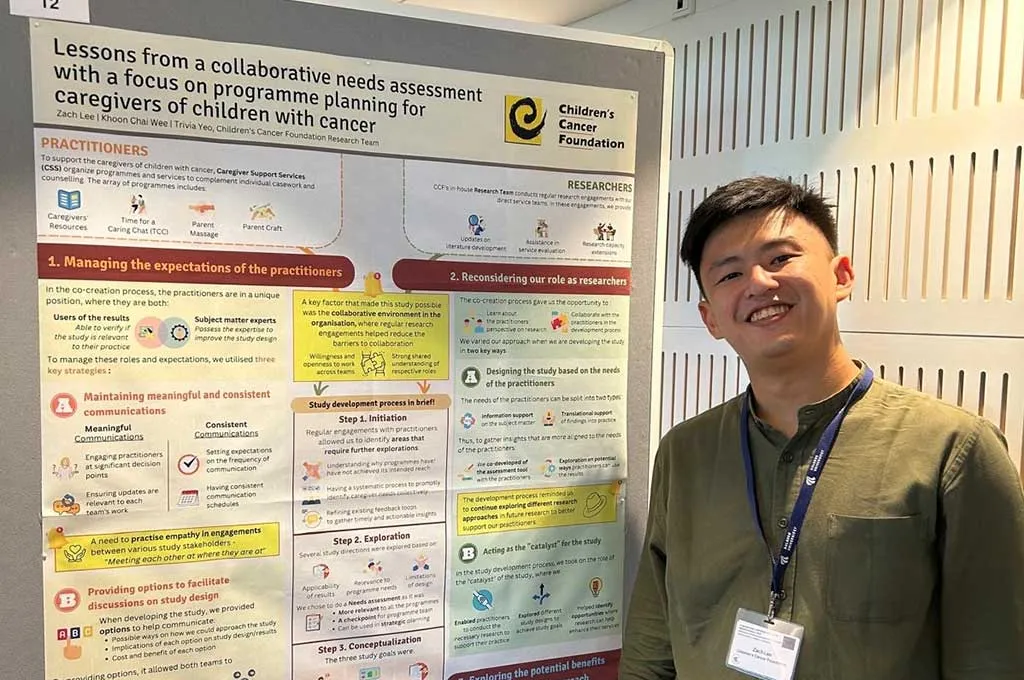
- Lessons from a collaborative needs assessment with a focus on programme planning for caregivers of children with cancer
In this poster presentation, we outlined a collaboration by the research team and case workers cum programme planners from the Caregiver Support Services (CSS) to design a practice research project that deliberately emphasizes programme planning needs and retrieval of actionable results, while managing the robustness of the study. Three key learnings have emerged from the study process that would help to facilitate future collaborations between researchers and practitioners, namely: (i) Negotiating the balance between representative and actionable results (ii) Managing the expectations of researchers, practitioners and service users in the process and (iii) The potential benefits of the service user-led approach in practice research. The poster was presented at the 6th International Conference on Practice Research in Social Work and the SASW Social Work Practice Research Seminar in 2023.
- Implementing the psychosocial standards of care in a childhood cancer setting in Singapore
2021
- Riding through the Pandemic Parenting a child with cancer during COVID-19
- CCF Employee Survey: Investigating The Impact Of New Work Arrangements on Staff
2020
- Rehabilitation needs and associated challenges of childhood cancer survivors in Singapore
- Do you know? Awareness and perception of childhood cancer in Singapore
- Needs assessment for siblings affected by childhood cancer: Parents’ Perspectives
2019
- Needs of children with cancer who have returned to mainstream school
2018
- The aftermath of losing caregiver to cancer: Assessment of psychosocial impacts from children and adolescents’ perspectives
- An exploratory study of bereavement care in Singapore: the needs, coping experiences and service provision
2017
- Siblings’ Coping with A Brother or Sister with Childhood Cancer: The Parents’ Perspectives
- The Needs of Children with Cancer Returning to School
1. Physical / medical constraints
2. Psychological and emotional wellbeing
3. Academic performance
4. Socialisation and interpersonal relationships